


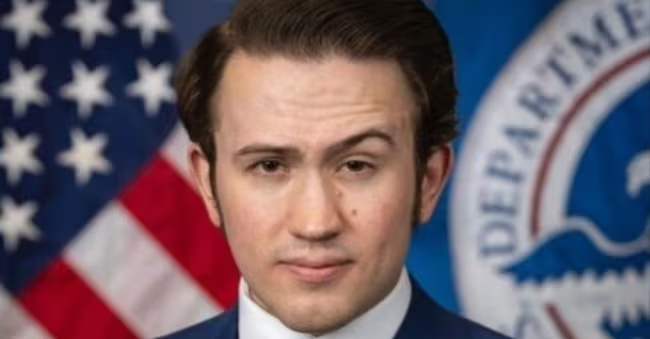
In an unexpected turn of events, Thomas Fugate, a 22-year-old political science graduate, has been appointed to lead the Department of Homeland Security’s Center for Prevention Programs and Partnerships (CP3). Despite having limited experience in national security, Fugate’s rapid ascent has raised eyebrows within the counterterrorism community. Appointed by the Trump administration, Fugate now oversees an $18 million terrorism prevention initiative designed to help communities combat violent extremism. This article examines Fugate’s background, his controversial appointment, and the implications for the future of terrorism-prevention efforts in the United States.
Fugate, a former campaign worker for Donald Trump and an intern at the conservative Heritage Foundation, has stepped into a role traditionally held by seasoned counterterrorism experts. His leadership of CP3 comes at a time when the office has undergone significant cuts to both staff and resources. Critics argue that his lack of expertise in national security may hinder efforts to combat domestic extremism, especially as violent attacks continue to rise across the country.
Thomas Fugate’s Unconventional Appointment and Its Implications
Thomas Fugate’s swift rise to a leadership role within the Department of Homeland Security (DHS) has raised concerns within the counterterrorism community. At just 22, Fugate was appointed to lead the CP3, a critical office tasked with preventing terrorism. His lack of direct experience in national security and counterterrorism operations has led to skepticism about his ability to effectively manage initiatives that combat domestic extremism.
This section will explore the implications of Fugate’s appointment. Fugate’s work within the Trump administration, including his political activism and prior campaign work, has been questioned by national security experts who argue that such a critical office should be led by someone with extensive experience in preventing terrorism. Fugate’s role in reshaping CP3’s focus will also be examined, considering the office’s sudden pivot from domestic extremism to border security and immigration concerns.
His appointment, though surprising, could reflect broader political trends within the administration, where loyalty to the president and ideological alignment have taken precedence over traditional expertise. This shift in leadership signals a potential redefinition of terrorism-prevention priorities under the Trump administration, with consequences for the effectiveness of counterterrorism operations nationwide.
How Fugate’s Appointment Highlights the Trump Administration’s Changing Focus on National Security
The Trump administration’s shift in national security priorities is evident in the appointment of Thomas Fugate to lead terrorism prevention efforts. Fugate’s previous work as a campaign aide and intern at the Heritage Foundation indicates a preference for political loyalty over established counterterrorism credentials. This shift away from traditional counterterrorism strategies raises important questions about the future of U.S. national security.
The Reorientation of National Security Priorities
Under the Trump administration, national security efforts have been redirected toward issues like immigration and border security, often at the expense of counterterrorism measures. Fugate’s appointment is seen as part of this broader reorientation, where traditional counterterrorism roles have been deprioritized in favor of issues that align more closely with the administration’s political agenda.
The Dismantling of CP3
The CP3 office, once a major hub for terrorism prevention and community engagement, has seen its resources and staff decimated in recent years. With fewer than 20 employees, the office has struggled to maintain its focus on domestic extremism. Fugate’s appointment marks the latest chapter in the office’s transition, with the focus shifting to issues such as border security and law enforcement partnerships rather than direct terrorism-prevention efforts.
Political Loyalty Over Expertise
Fugate’s rapid rise within the Trump administration is emblematic of a broader trend in which political loyalty takes precedence over experience in key national security roles. Critics argue that Fugate’s limited background in national security may hinder efforts to prevent terrorism and violence, particularly as the U.S. faces rising extremist threats.
The Impact of Fugate’s Leadership on CP3’s Mission and Operations
Fugate’s leadership of CP3 represents a significant shift in the office’s approach to terrorism prevention. Under his direction, CP3 has focused less on counterterrorism and more on supporting border security initiatives. This pivot in mission has raised alarms among terrorism prevention advocates, who argue that resources should be directed toward preventing extremism rather than reinforcing the administration’s immigration priorities.
- Shifting Priorities: CP3’s new focus on border security has shifted resources away from combating domestic terrorism, especially far-right extremism. This move raises concerns about the effectiveness of terrorism prevention efforts in the U.S.
- Budgetary Cuts: With ongoing cuts to DHS funding, including the elimination of terrorism prevention grants, CP3’s ability to carry out its mission has been severely restricted. Fugate’s leadership will face challenges in balancing the need for funding with the administration’s shifting priorities.
The Role of Fugate’s Background in Shaping the Future of Terrorism Prevention
Thomas Fugate’s background, including his work as a political aide and his connections within Trump’s circle, may play a pivotal role in shaping the future of terrorism prevention strategies. His rise through the political ranks has led some to question whether his leadership will be influenced more by political concerns than by the needs of the nation’s counterterrorism infrastructure.
As a leader with limited experience in national security, Fugate’s appointment could signal a future where national security priorities are heavily influenced by political affiliations. However, his experience in working with conservative think tanks and engaging with right-wing movements may also give him a unique perspective on addressing extremism, particularly as it manifests within certain political factions.
The Broader Implications of Fugate’s Appointment for U.S. National Security
Fugate’s unexpected appointment to a key position within the Department of Homeland Security signals broader changes in U.S. national security priorities. As the administration continues to focus on immigration and border control, terrorism prevention efforts may become increasingly sidelined. This shift raises concerns about the long-term effectiveness of U.S. counterterrorism policies, particularly as extremist violence continues to rise across the nation.
Changing National Security Priorities
- Immigration as a National Security Priority: The Trump administration has emphasized immigration and border security as central to national security, while paying less attention to domestic terrorism.
- Impact on Counterterrorism Efforts: As resources are redirected to border security, there are concerns about the long-term viability of U.S. counterterrorism strategies, particularly in preventing extremist violence from within the country.
Conclusion
Thomas Fugate’s rise to lead terrorism prevention efforts at the Department of Homeland Security has ignited debates over the future of U.S. national security. With limited counterterrorism experience and a background rooted in political loyalty, Fugate’s appointment reflects a broader shift in national security priorities under the Trump administration. While some argue that this move will undermine efforts to combat domestic extremism, others believe it reflects a strategic pivot toward reinforcing immigration and border security. As the U.S. faces a growing threat from extremist violence, the effectiveness of Fugate’s leadership will ultimately determine the future direction of U.S. counterterrorism policies.
FAQ’s
Why was Thomas Fugate appointed to lead CP3 despite his lack of counterterrorism experience?
Fugate’s appointment is seen as part of the Trump administration’s focus on loyalty and political alignment. His lack of experience in national security has raised concerns, but his rapid rise signals a shift in priorities toward immigration and border security.
How has Fugate’s appointment impacted terrorism prevention efforts?
Critics argue that Fugate’s leadership has led to a shift away from domestic terrorism prevention in favor of border security. This has resulted in reduced resources for combating extremist violence within the U.S.
What is CP3, and what role does it play in terrorism prevention?
The Center for Prevention Programs and Partnerships (CP3) is a key office within the Department of Homeland Security that focuses on preventing extremism and violence at the community level. Under Fugate’s leadership, the office has shifted its focus toward border security issues.
What challenges does Fugate face as a young leader in counterterrorism?
Fugate faces challenges in earning the trust of terrorism-prevention experts due to his limited experience in the field. He must navigate the complexities of leading an office with a significantly reduced staff and shifting priorities.
How does Fugate’s leadership reflect broader changes in U.S. national security priorities?
Fugate’s appointment highlights a shift in U.S. national security from counterterrorism to immigration and border security, reflecting broader political trends under the Trump administration. This shift may have long-term implications for the effectiveness of counterterrorism policies.
