


At the California Democratic Convention in San Francisco, thousands of political figures, activists, and delegates convened to strategize for the upcoming midterm elections, galvanized by recent successes and a renewed sense of purpose. With the shadow of President Donald Trump’s administration looming large, many California Democrats are pushing forward with a unified message: the time has come for a substantial check on Trump’s policies, especially as the country prepares for a critical election season.
Throughout the weekend at the Moscone Center, the state’s Democratic leaders, including Governor Gavin Newsom, Congresswoman Nancy Pelosi, and others, sought to assert California’s pivotal role in the national political landscape. Pelosi, who has long been a formidable presence in U.S. politics, declared the urgency of dismantling what she described as “Trump’s reign of terror”—a sentiment echoed by other influential Democratic figures like Adam Schiff. Schiff, known for his fierce opposition to the president, invoked the state flag’s symbol of the grizzly bear, likening the Democratic resistance to the animal’s unyielding force when provoked. His words were a rallying cry for Democrats who see this midterm election as a “reckoning” for the Trump administration.
A major theme of the convention was the strength of California’s political stance against federal overreach. The state’s redistricting victory, bolstered by Proposition 50, was cited as a testament to California’s ability to lead the national party by example. This victory was framed as a counter to Republican efforts to gerrymander districts in states like Texas, reinforcing California’s reputation as a progressive fortress pushing back against Trump’s regressive policies. With Trump’s administration attacking healthcare, immigration rights, and climate protections, California’s Democratic leaders see themselves as the front-line defenders of liberal values.
The fight to succeed Newsom, who is term-limited, looms large over California’s political future. The state’s unique jungle primary system—where the top two vote-getters, regardless of party, advance to the general election—has created anxiety within the Democratic ranks. With several prominent figures in the race, including Congressman Eric Swalwell, former Congresswoman Katie Porter, and billionaire environmentalist Tom Steyer, the lack of a clear frontrunner has raised concerns that Republicans could capitalize on the fractured field. In recent polling, conservative figures such as Steve Hilton and Riverside County Sheriff Chad Bianco have surged ahead, intensifying the pressure on California Democrats to quickly rally behind a candidate who can unify the party and fend off potential Republican challengers.
In addition to the gubernatorial race, Democrats at the convention were also reflecting on the growing ideological divides within the party. Progressive leaders like Congressman Ro Khanna and Representative Robert Garcia were welcomed as champions of the party’s resistance to Trump and his allies. Meanwhile, labor leaders, including Lorena Gonzalez, spoke out against the increasing political power of Silicon Valley, calling on Democrats to stop allowing the tech industry’s elite to influence national policies. Gonzalez’s remarks were a stark reminder of the structural issues facing the party, especially as many in the tech sector continue to support policies aligned with Trump’s agenda, despite being traditionally aligned with liberal causes.
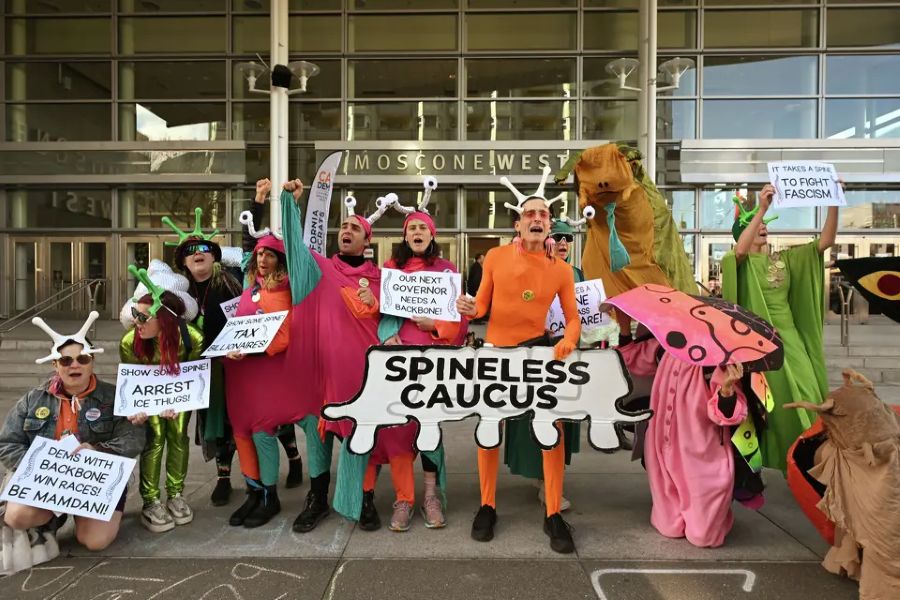
The gathering also witnessed moments of lighthearted but pointed protest, with activists dressed in snails and other “spineless” creatures to symbolize their frustrations with Democratic leaders. Their message: it’s time for the party to show more backbone in defending immigrant rights, transgender protections, and other progressive causes. The activists distributed business cards emblazoned with a simple but powerful message: “Trumpism thrives when Democrats rush to meet cruelty in the middle.”
As California Democrats gear up for the critical election season, the convention served as a snapshot of a party in transition—one that is determined to continue its fight against the Trump administration’s agenda, while grappling with internal divisions over the direction of its leadership. Whether they can unite behind a single candidate and maintain their dominant position in the state remains to be seen, but there is no doubt that California will continue to be a battleground for the future of American politics.
